

There must be something afoot for this particular Northumberland trip; I can’t recall EVER travelling down such ‘unique’ roads as we have done in the last 24 hours! It isn’t just that they’re undulating more than your white-knuckle theme-park roller-coaster, they’re also full of blind summits and bends, and barely tarmac-surfaced enough to accommodate the width of a standard car. The road/track down to Vindolanda Roman Fort and Museum is no different, and we thanked our lucky stars that we made it to the wonderfully laid-out car park unscathed.
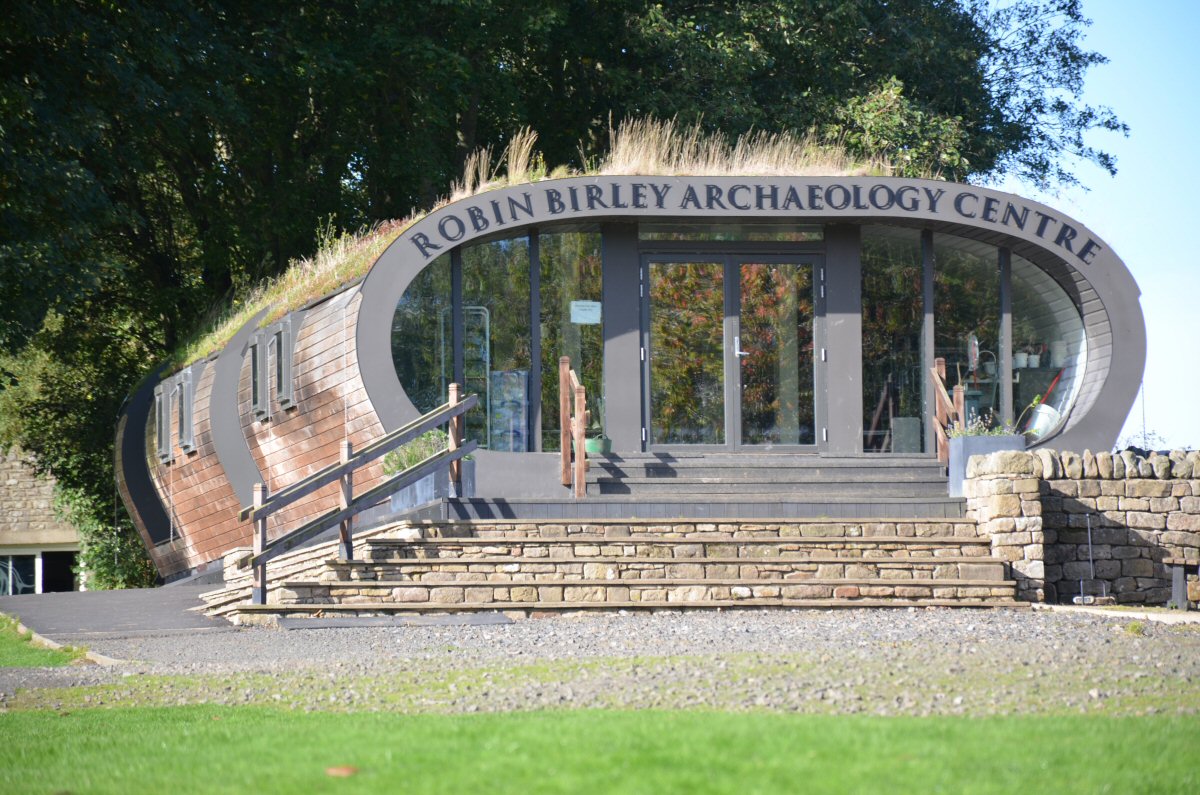
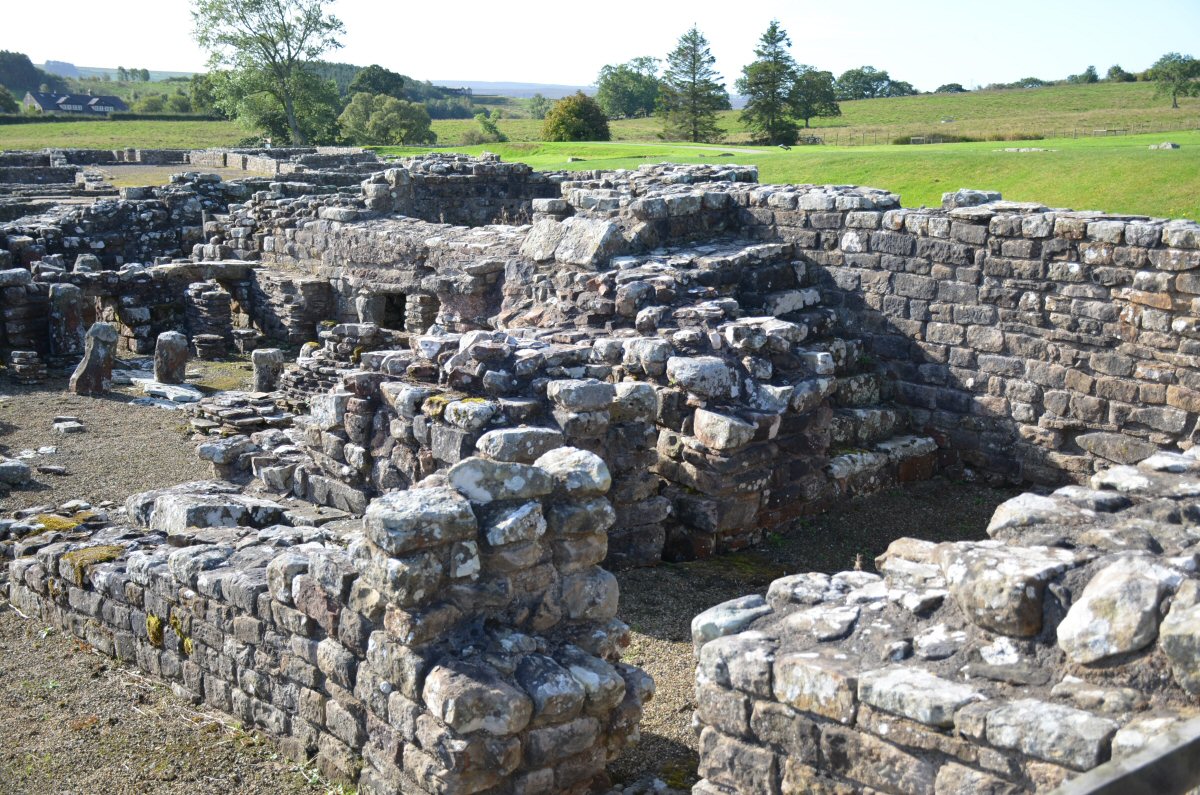
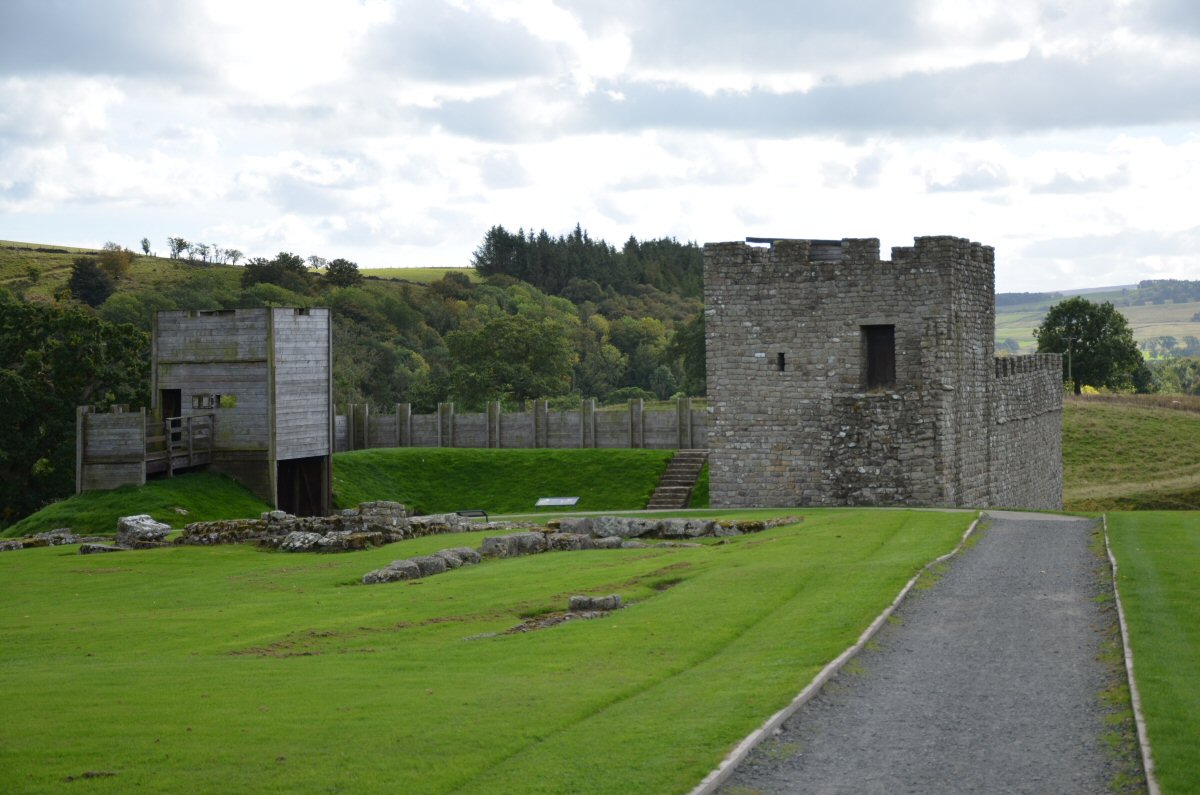
Vindolanda is a world-famous Roman Auxiliary Fort and Archaeological site just south of Hadrian’s Wall. Managed by the Vindolanda Trust, the site remains an active dig, with more and more artefacts being discovered and catalogued into its already vast collection. As well as the preserved ruins of the fort and associated village, bath-house and housing, there is also a museum where you can see the enormous display of thousands of artefacts and listen to audio descriptions.
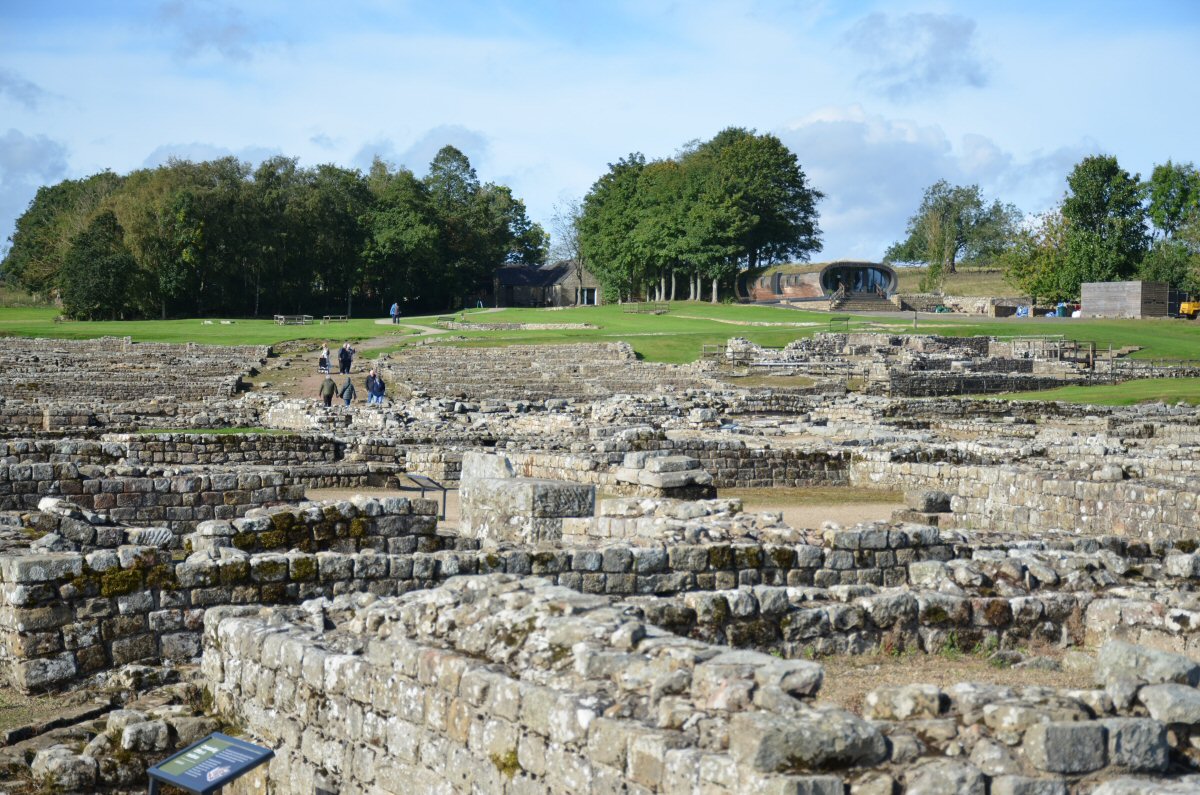
Just as we’d entered the visitor centre reception, the gentleman informed us that one of the team had just begun a guided tour, which would last about an hour, so we skedaddled and tagged along just as Helen was getting into her stride. Less than 10% of the fort remains able to be seen as an above-ground structure, but what you can see is no less impressive for being only a portion!
Built to guard Stanegate, a frontier road between the River Tyne and the Solway Firth, Vindolanda was occupied approximately 85–370 AD (nearly three centuries), so pre-dates Hadrian’s Wall, the construction of which began in 122 AD. For those who are geeks, did you know that the wall is some 73 [modern] miles in length. Pretty impressive, no?
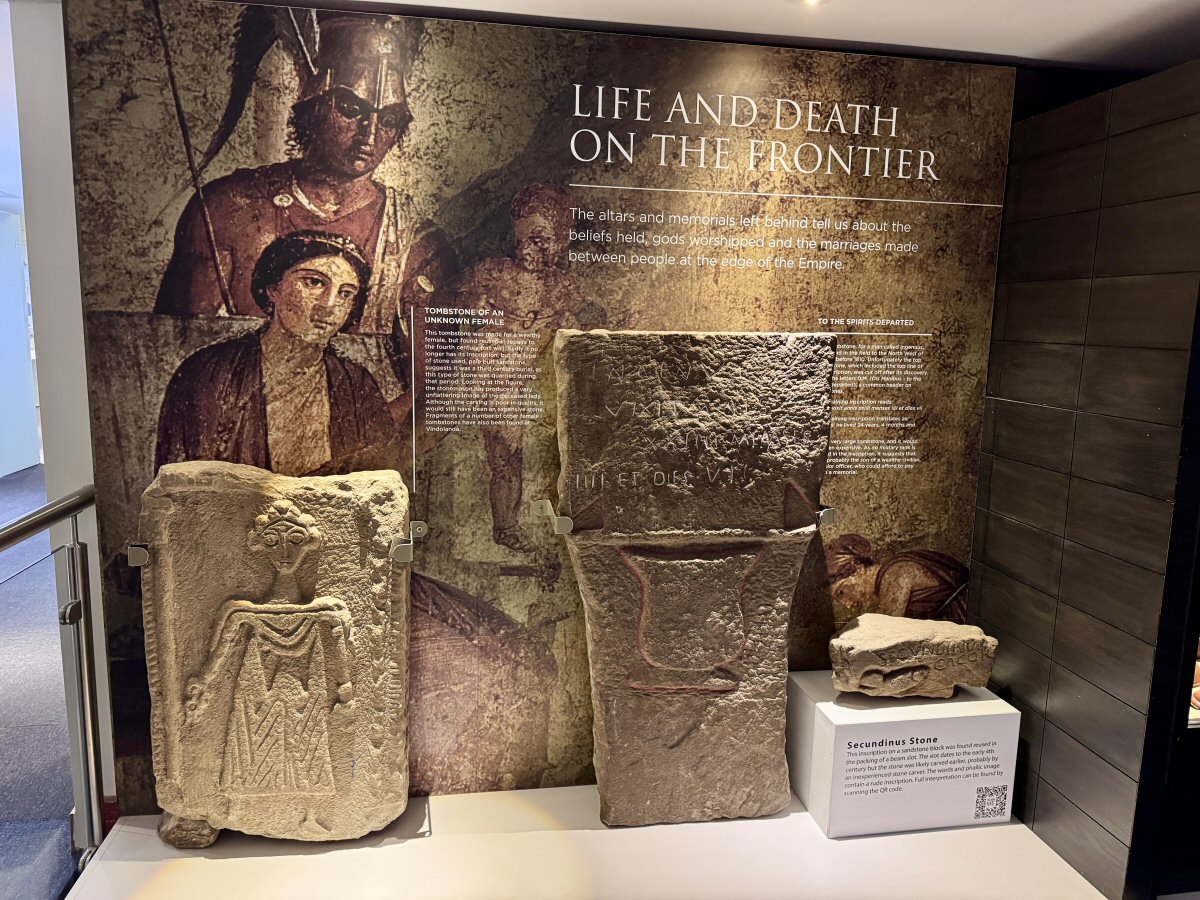
It’s a skill, I think, to keep an audience engaged (especially one outside with lots going on around them), but Helen proved more than up to the task, interspersing factual information with humour and quotes from Monty Python! As well as an impressive collection of leather shoes, pottery and metal-work, Vindolanda has a not insignificant amount of writing tablets; in fact, it is the largest collection of them in Western Europe. Life, as we know, wasn’t all smooth-sailing in Roman civilisation and the discovery of a young girl’s body brings that home hard. As you view her small skeleton in the museum, you can’t help but grieve for her demise; extensive research on her body revealed that her end wasn’t a nice one.
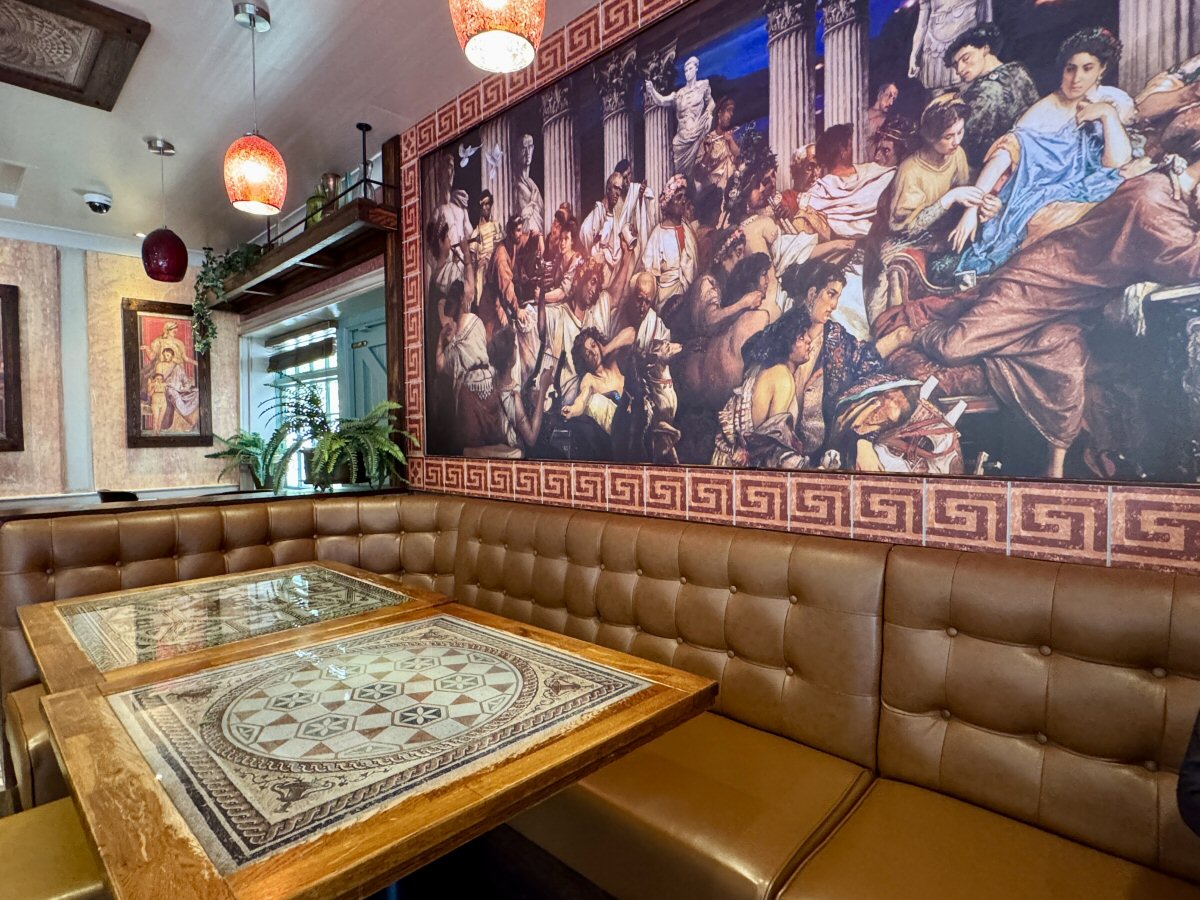
What is nice is the cafe; a real jewel in the crown. Spotlessly clean, and kept so throughout the day, the team serve a great range of food, from cakes and nibbles to hot sausage rolls, pies, and jacket potatoes. There is plenty of seating inside, but there is also a snazzy outdoor decking area whose tables are covered with huge parasols. From this area you can look out over manicured lawns to the replica Temple, accompanied by the soothing sound of a babbling brook. Vindolanda is, in my humble opinion, well worth a visit. If you get time, I would try to get a trip to its sister site, Magna, home to a Roman Army Museum, in too.
We had also planned to get to Steel Rigg, a dramatic view-point on Whin Sill Crags that affords visitors great views over Vindolanda (located about one mile to the south), but we never made it there. From Steel Rigg you can see Crag Lough, a glacial lake and, before it was senselessly felled in 2023, the iconic Sycamore Gap tree stood proudly against the landscape. However, in true Mother Nature [stuff you] style, new shoots are growing, coppice-style, from the remaining stump, so it is still worth the trek across stunning scenery to see.
Having satiated our inner history geek, we jumped back in the jalopy to head towards Newcastle itself where our next accommodation, Maldron Hotel, awaited us.