

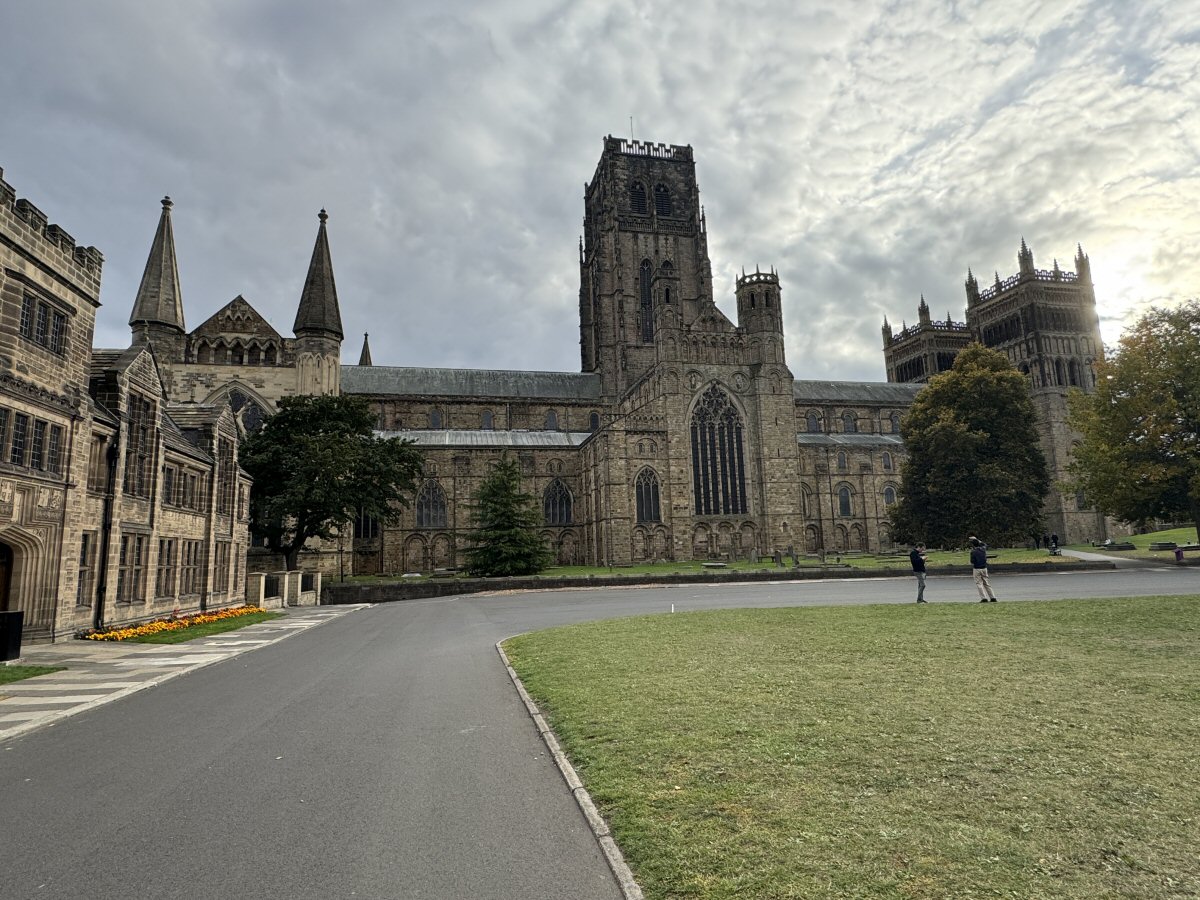
Built between 1093 and 1133, Durham Cathedral is widely regarded as the finest, largest example of Norman architecture in England and contains the first known medieval-era pointed arch structure. Unsurprisingly, it is Grade I-listed and holds UNESCO ‘World Heritage Site’ status, too.
Durham Cathedral is the successor to Lindisfarne Priory, and contains the Shrines of Saint Cuthbert and Saint Bede; the shrines are very impressive and people from around the world, historians and religious worshippers alike, come to view them.
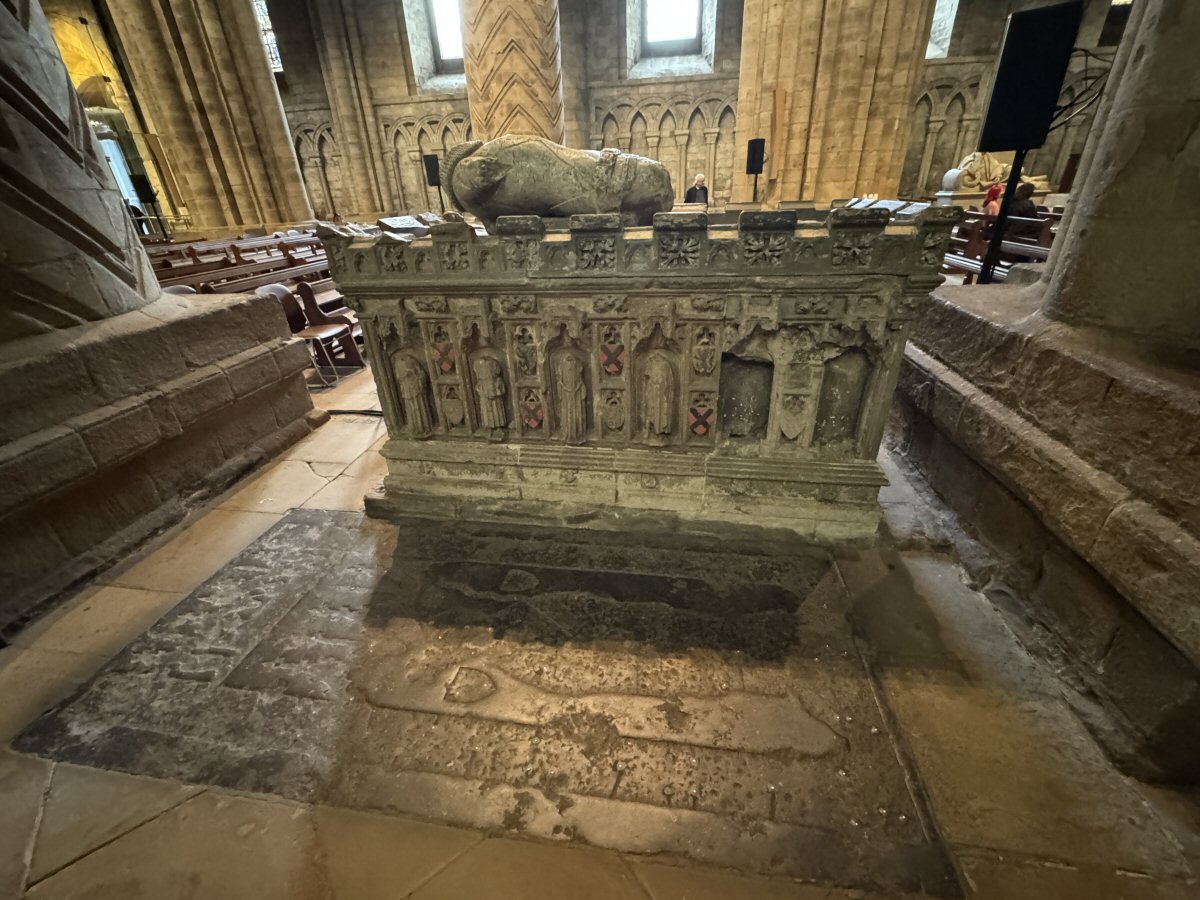
The family tombs of the Neville family, a noble dynasty from the North-East that fought in the Wars of the Roses against the Percys (Earls of Northumberland) are also located in the Cathedral.
Fans of history will geek out at the fact that not one, not two, but THREE Magna Carta documents are held at Durham Cathedral: the 1216, 1225, and 1300 issues. Additionally, three Forest Charters are housed there, including one from the first issue in 1217. Due to the rarity, significance and fragility of all these historic documents, none are out on public display, but do occasionally appear in exhibitions.
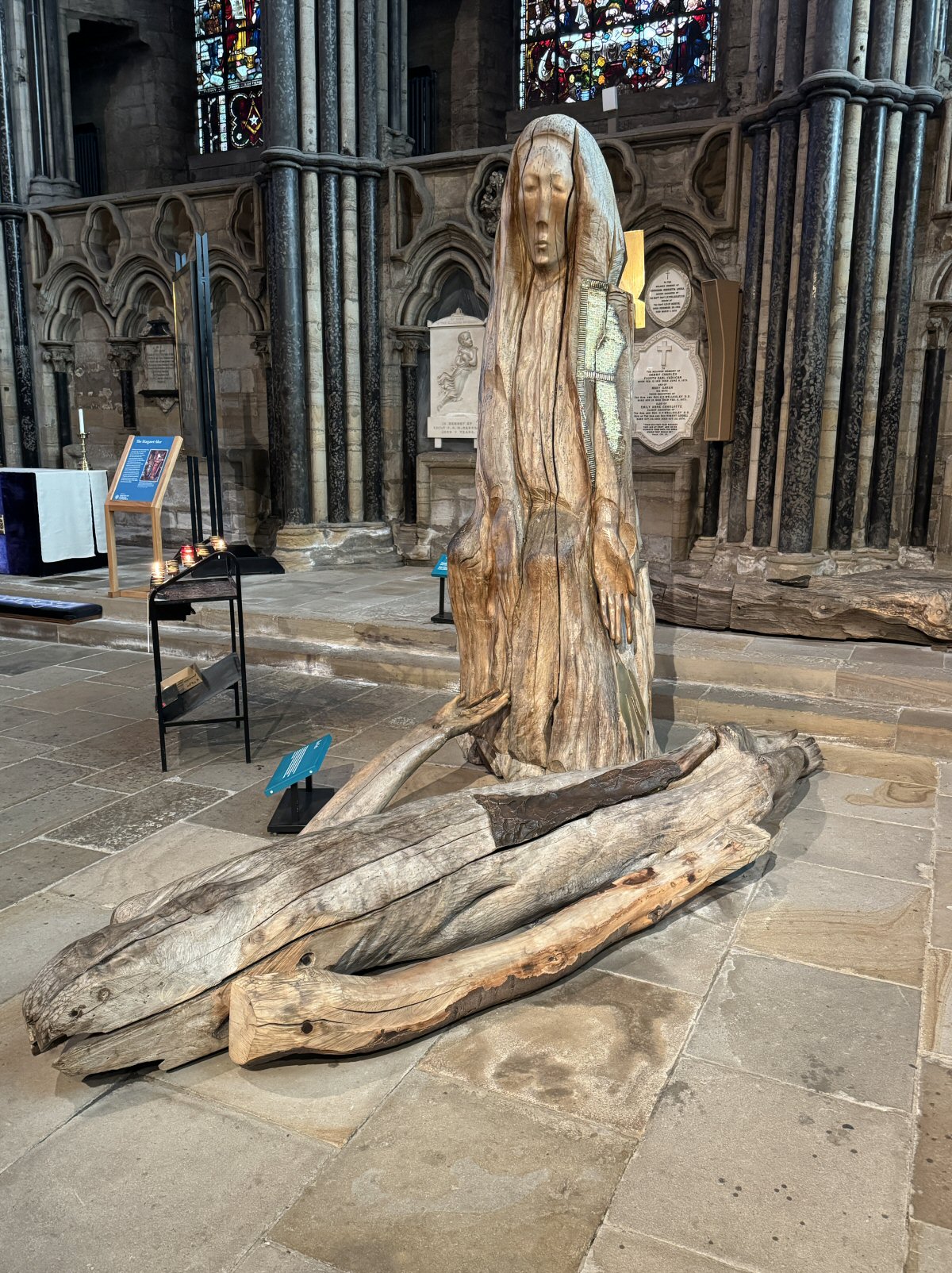
It isn’t all about the stained-glass windows, shrines and masonry history; modern inclusions are to be found and appreciated, too. The Pieta and Christ in the Tomb are two pieces of wood and polished brass detail, and wood only respectively sculptures by Fenwick Lawson on display; both are to be found in the Chapel of the Nine Altars.
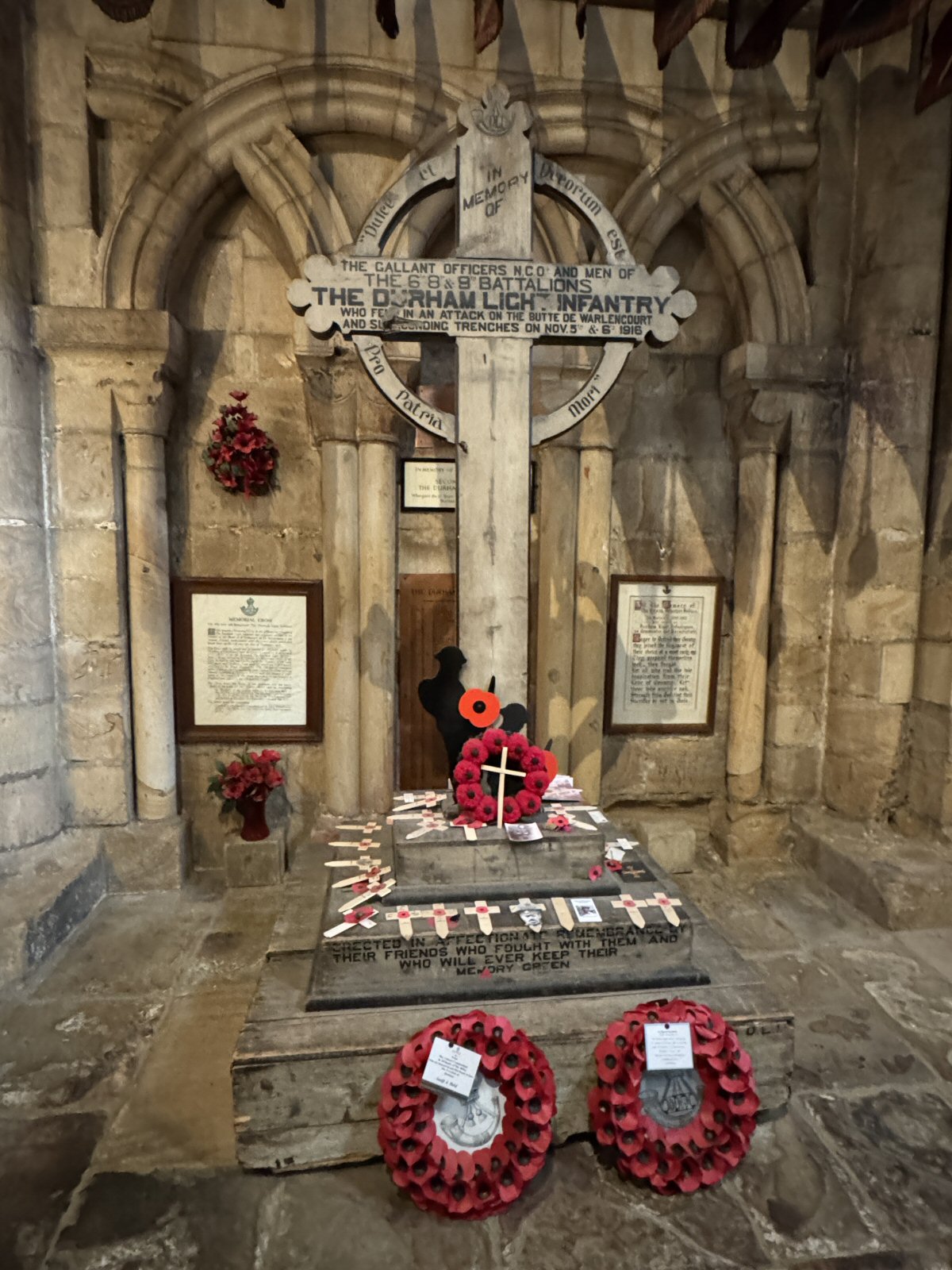
Military fans can view the Durham Light Infantry’s Chapel, and I got goose-bumps at the see-through outlines of fallen soldiers sat on the wooden pews, almost as if they were sat with the current descendants of comrades in solidarity.
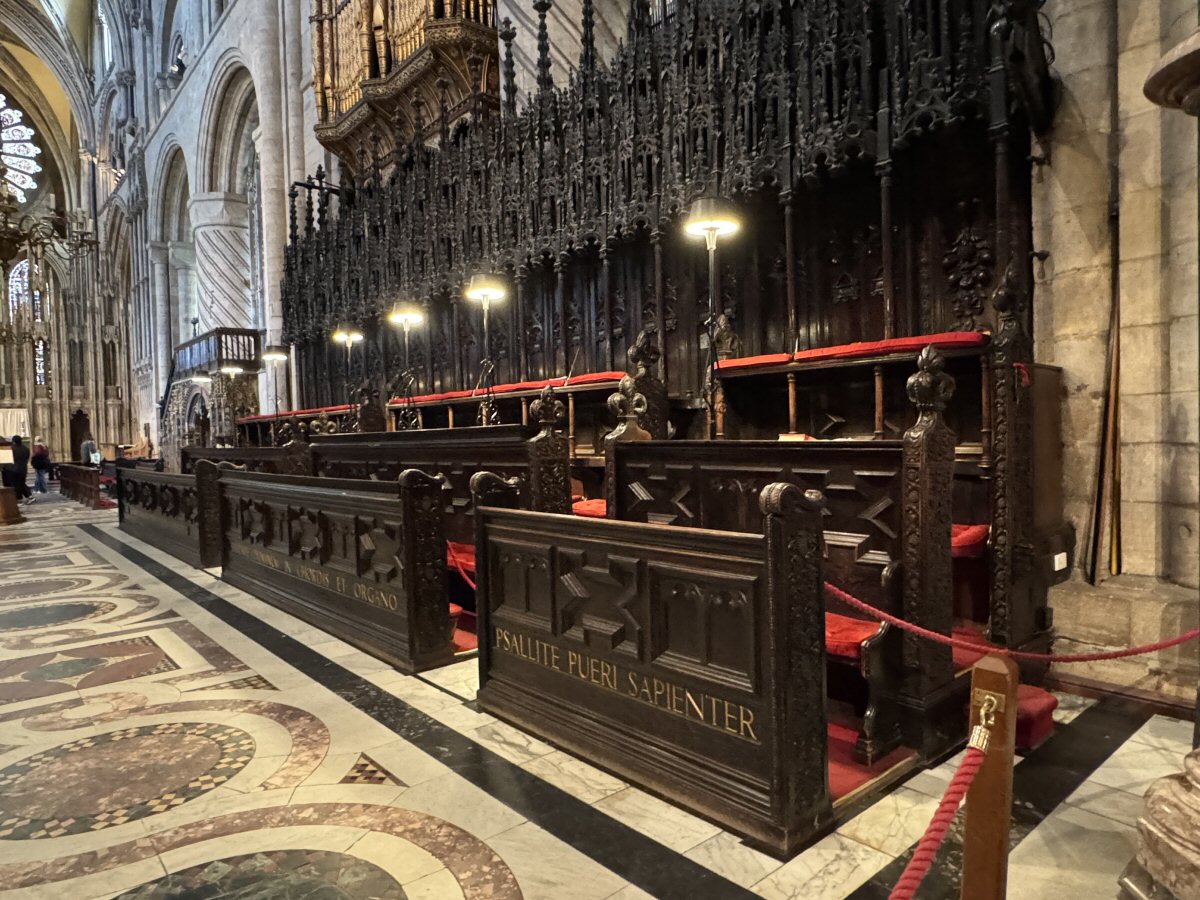
Another modern touch is the programme of events that are held inside the Cathedral; His Nibs and I sat and listened to the soundcheck for that evening’s ‘A night of Motown’ concert. Please do go and check the schedule of events out, the range may just surprise you!
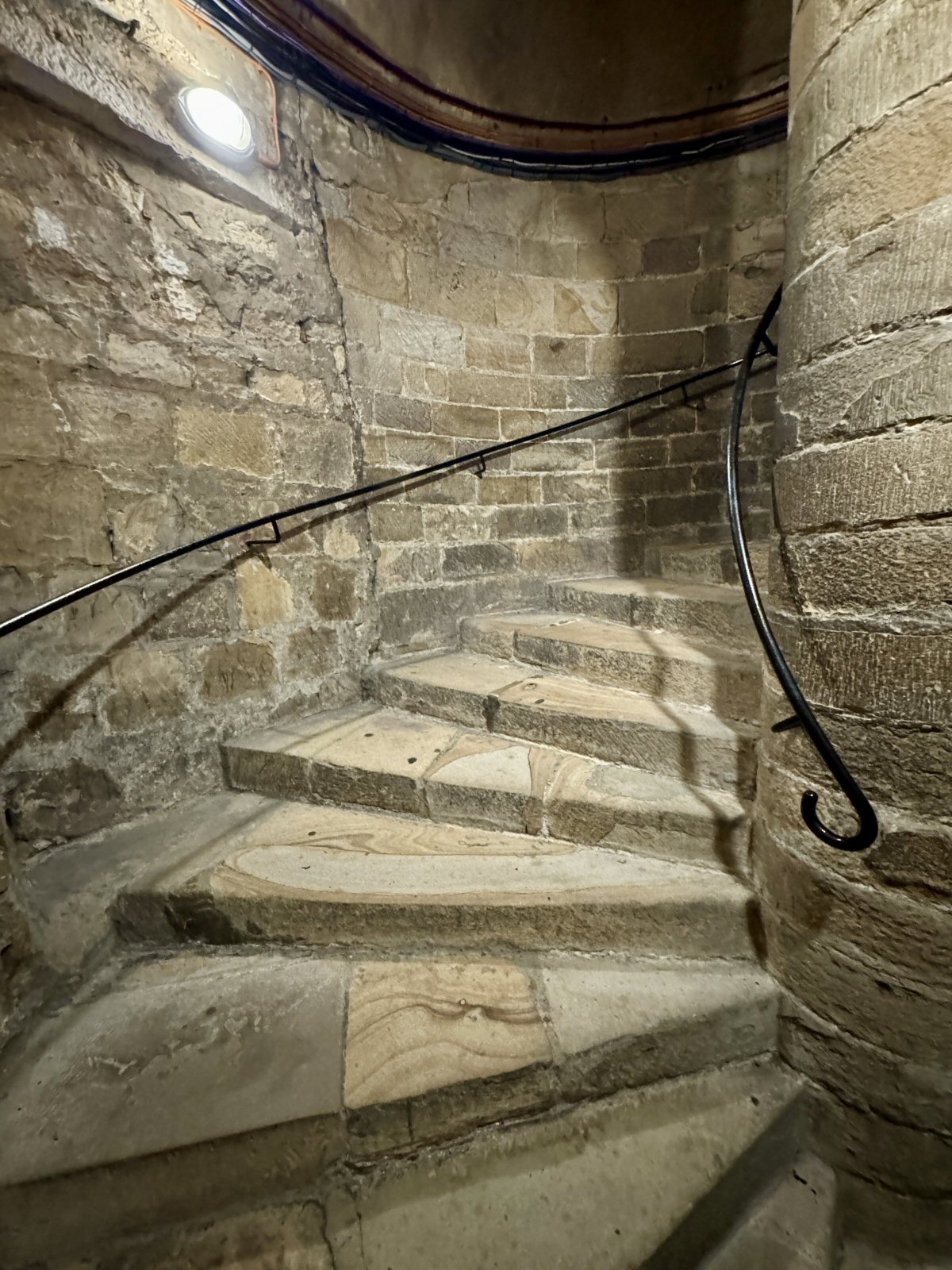
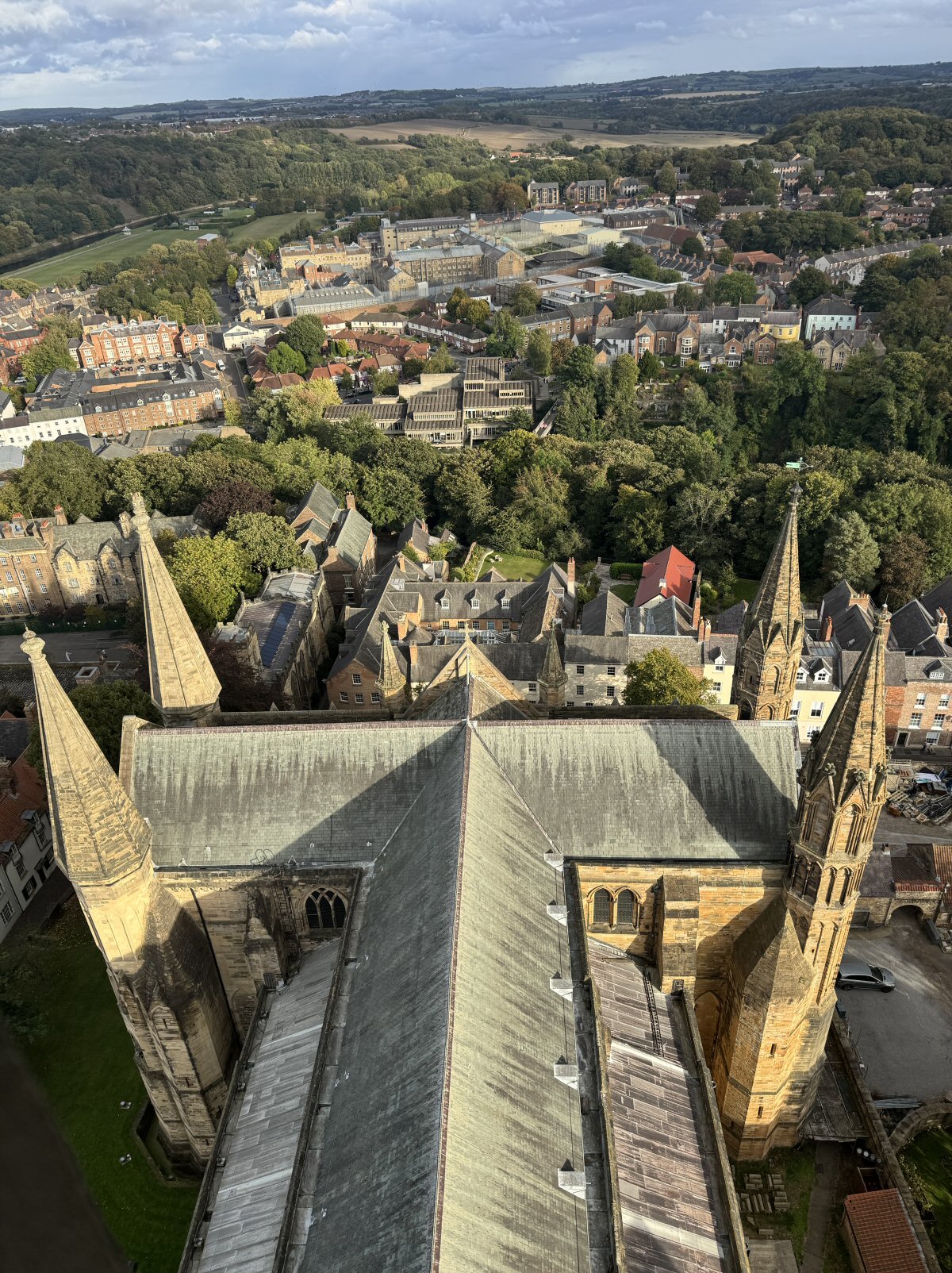
At our allotted time of 4pm, it was time for The Man and I to ascend the 325 steps inside the Main Tower and take in the incredible views across the city and beyond. Thankfully, the weather had improved and when we got to the top, we were rewarded with breath-taking scenery; well, it would’ve taken our breath, except the climb had already done that!
At 218 feet/66 metres, the Central Tower and its 325 spiral steps are not an insignificant matter, and to climb up them you do need to book due to capacity being limited. Weather conditions sometimes curtail the climb being permitted and, having been on the metal at the Cathedral’s roof, I can see why – it would be slippery and dangerous.
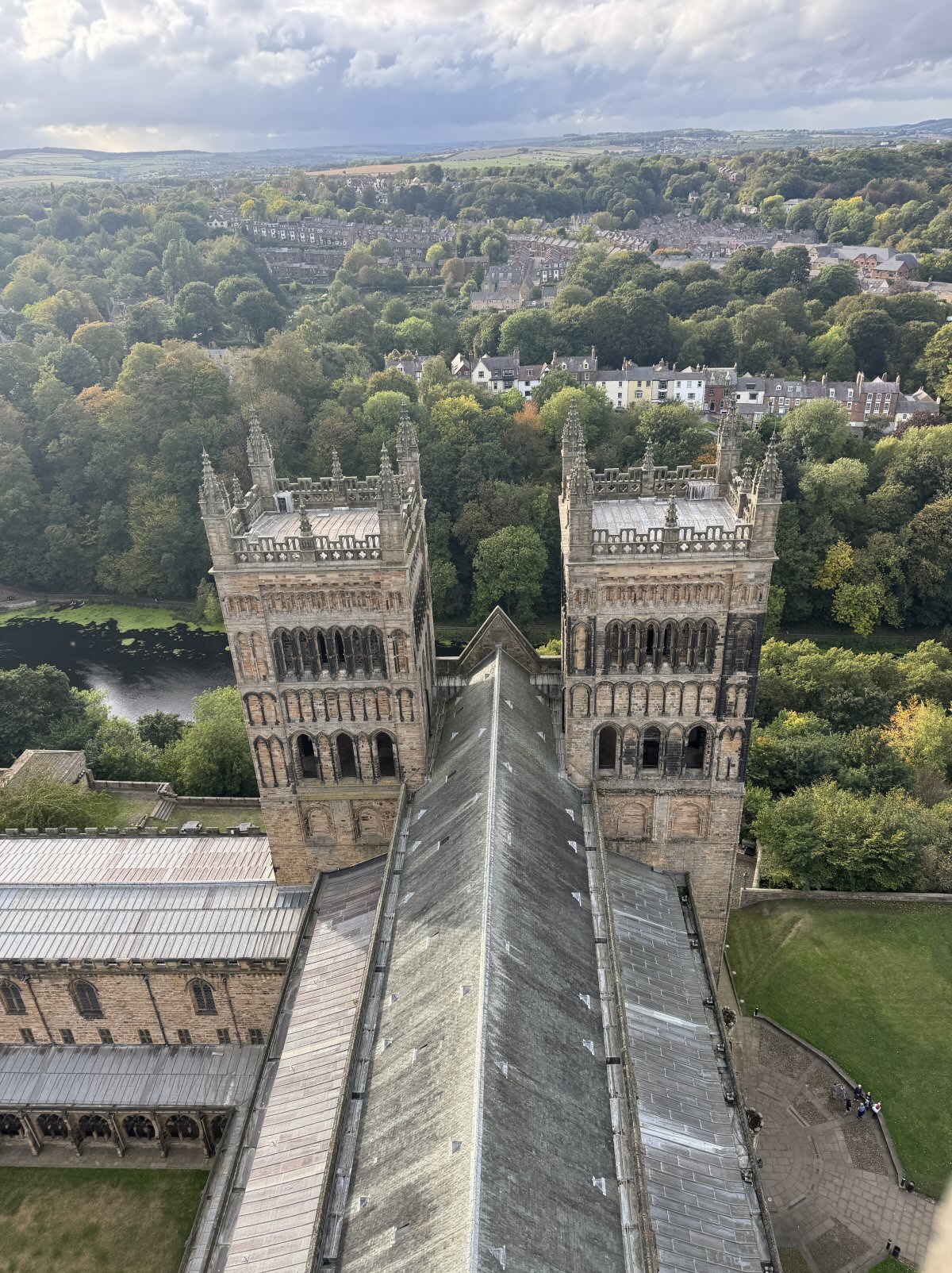
In optimal conditions, you can see as far north as Sunderland, the Penshaw Monument, or even the Angel of the North! The Western Towers of the Cathedral may be smaller at only 144 feet 6 inches tall but, believe me, they are still blooming lofty; my aching neck from craning to see their apices is testament to it!
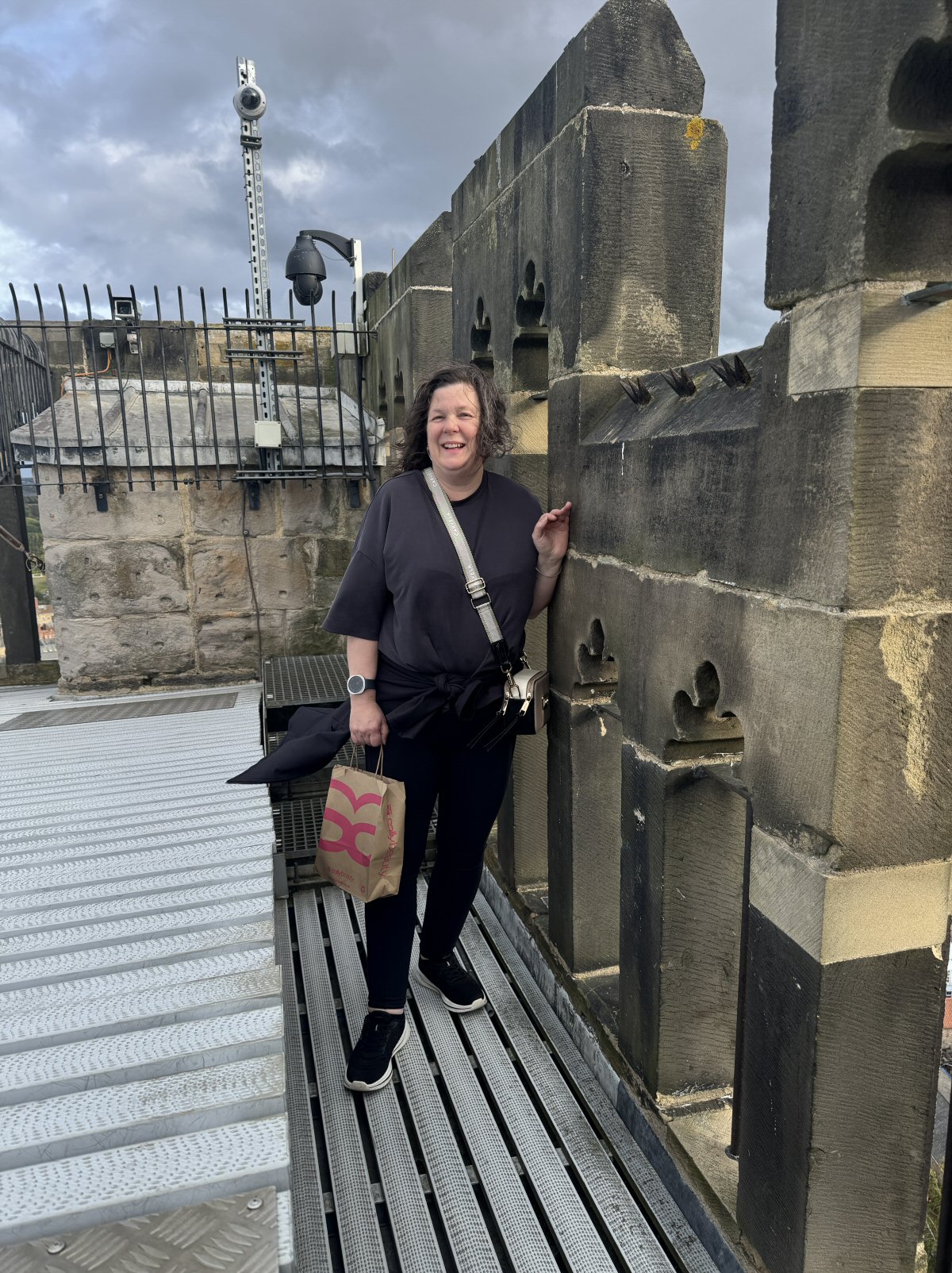
Weirdly, I found the descent from the Central Tower to be more arduous; maybe it was the direction of descent or the effect of gravity? To climb the Cathedral Tower costs £10 per adult; children under 8 years old are not permitted to ascend, but those aged 8–17 may climb (no cost) if accompanied by an adult.
Having made a voluntary donation on our way out (entry to Durham Cathedral is free, but donations are very much appreciated; typical suggestion is £5), it was time to do a little exploring of the city before our dinner at The Cellar Door...
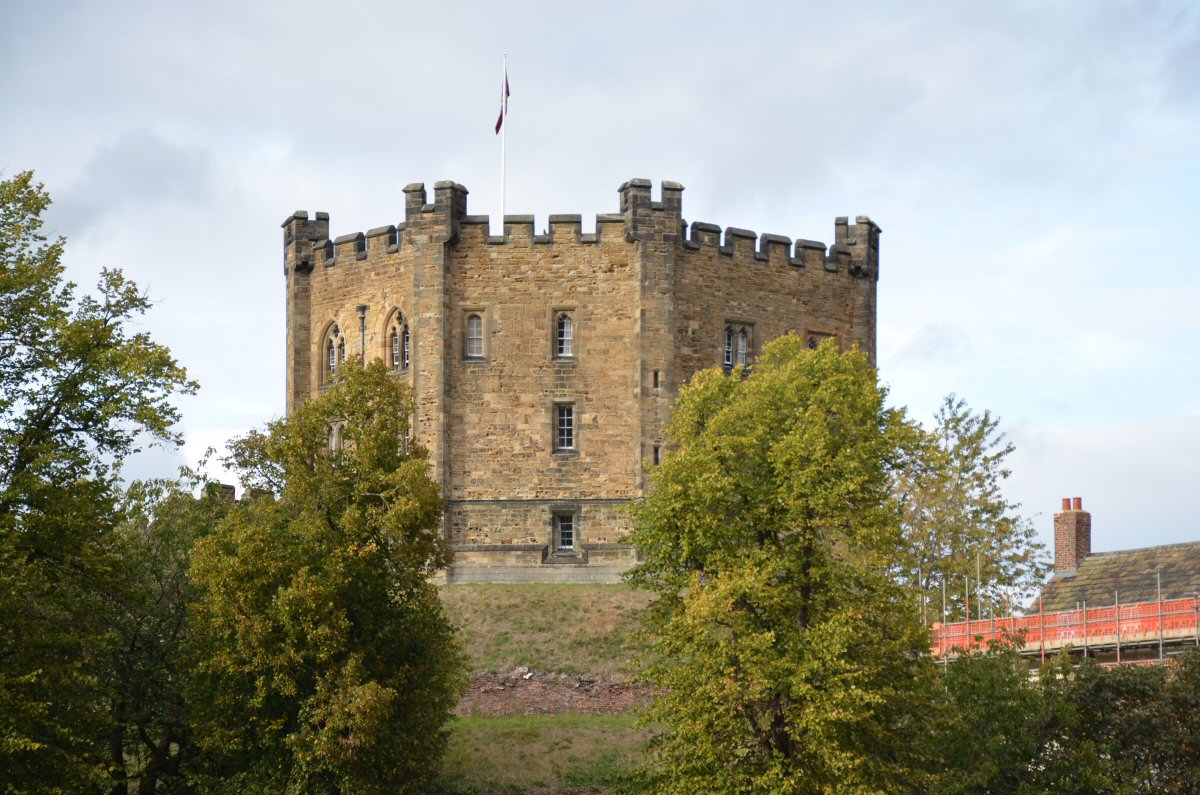
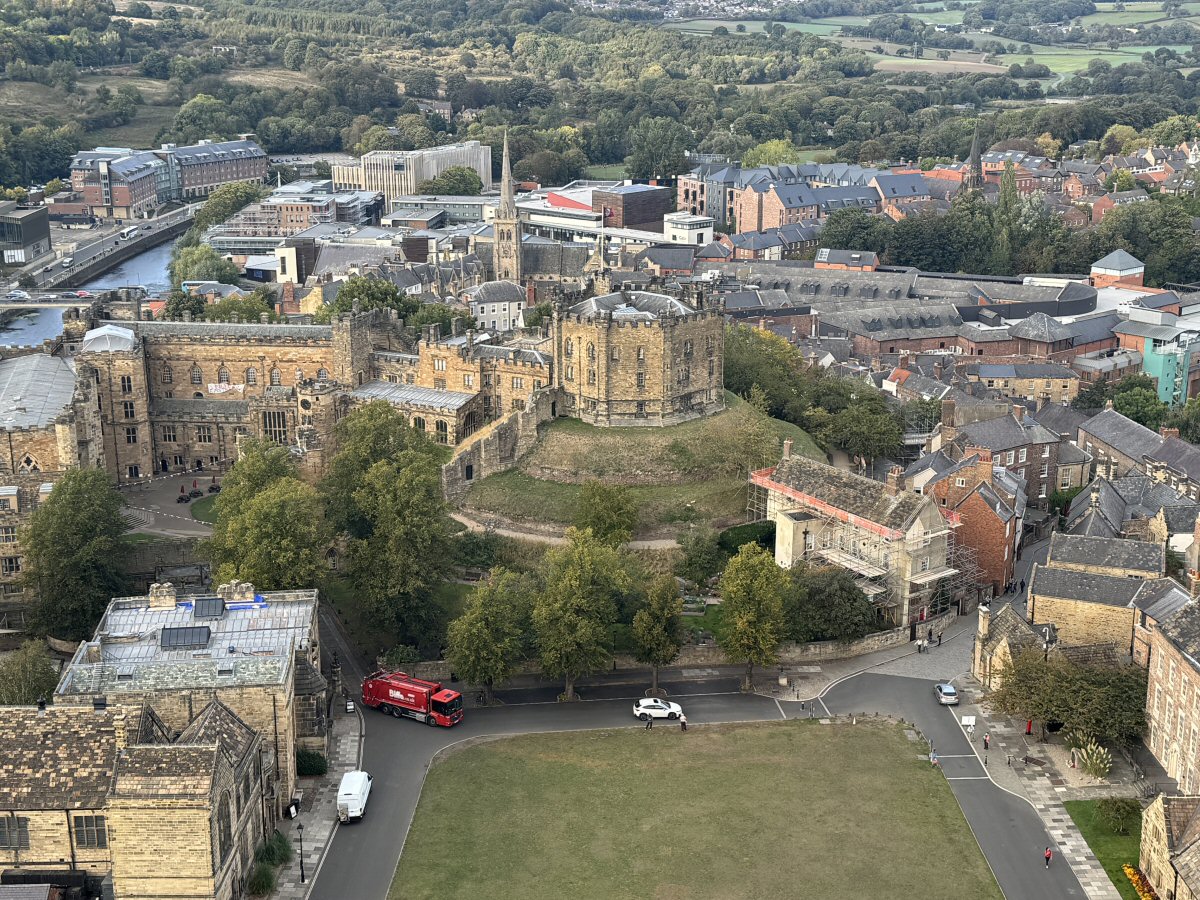
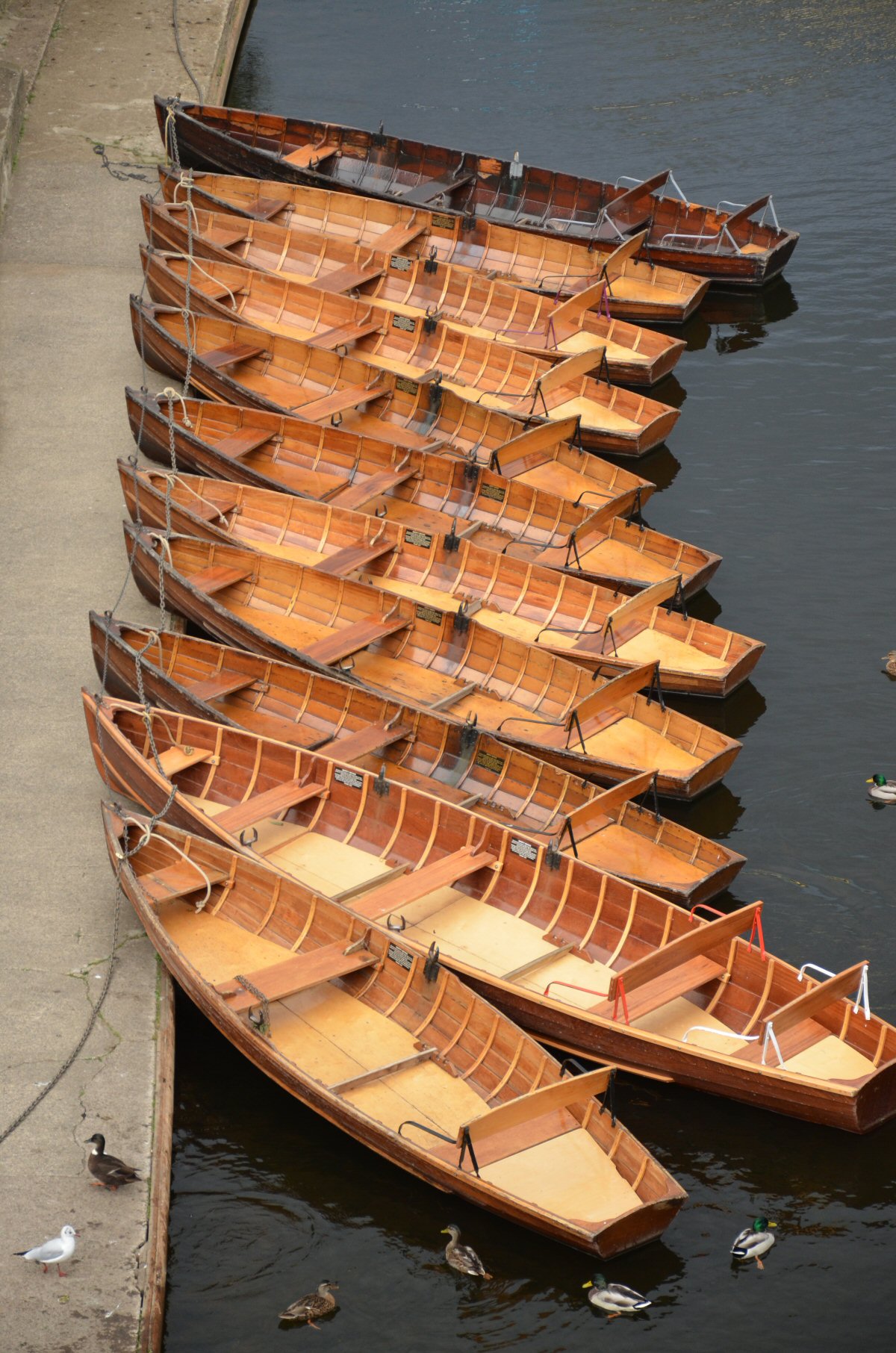
Whilst Durham is probably best known for the Cathedral, this historic city also has a castle whose construction began in 1072 on the orders of William the Conqueror, now owned and used by Durham University. There are a multitude of beautiful walks along the looping River Wear to be had or, for a different perspective, why not hire a boat and view the city that way?
Where there are rivers/water, there are bound to be bridges, and Durham has three historic stone-arched bridges: Elvet, Framwellgate, and Prebends.
Each bridge has a tale to tell; Elvet Bridge is Grade I-listed and was built between 1160 and 1195; Framwellgate (built in approximately 1127) was the first permanent river crossing, and parts rebuilt in the early 15th century, after floods, gave it its current 2-archway form; the triple-arched Prebends Bridge was constructed between 1772 and 1778 and provides magnificent views of the Cathedral. If you look a little closer at Prebends, you will see a carved quote on it from Walter Scott – just a little fun fact.
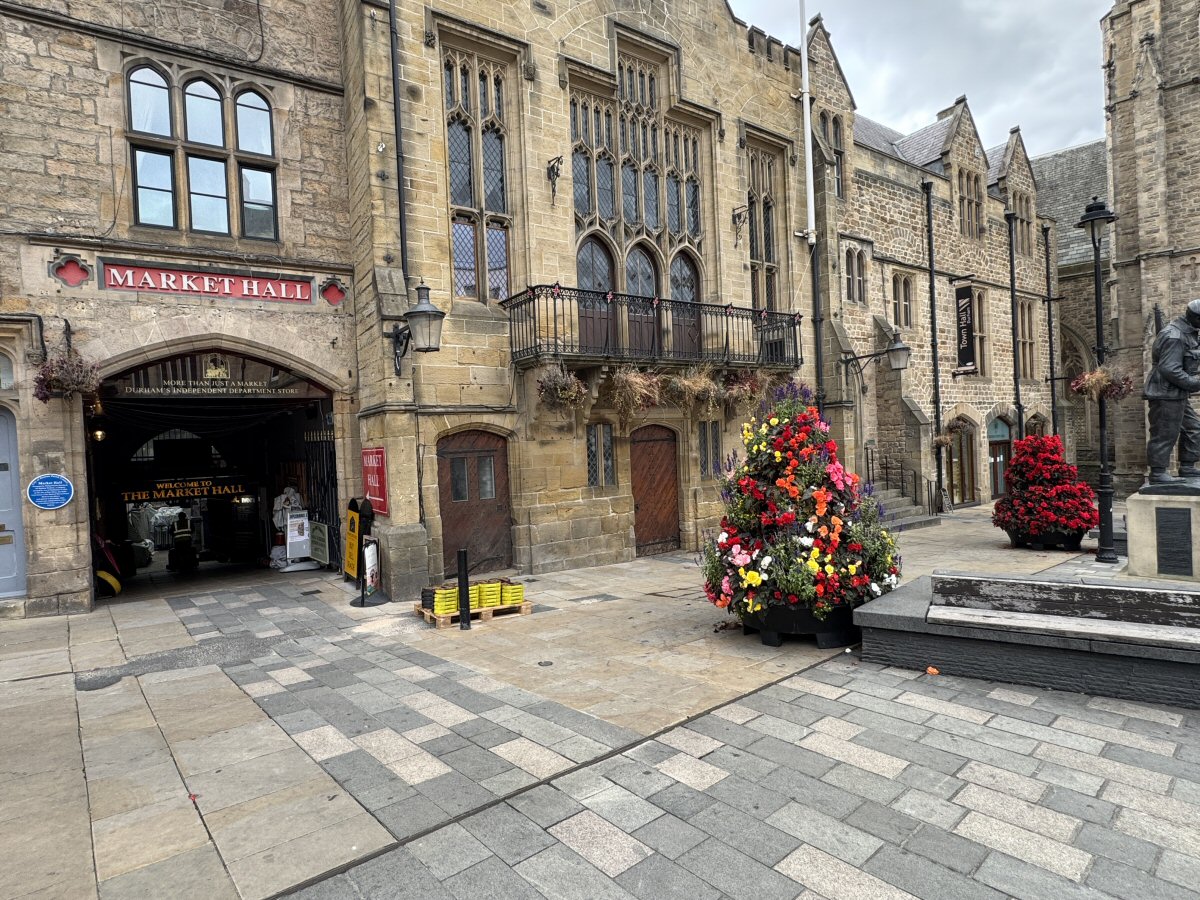
His Nibs and I wandered down to Durham’s Market Square, admiring the Market Hall, the Guildhall, and the Town Hall buildings.
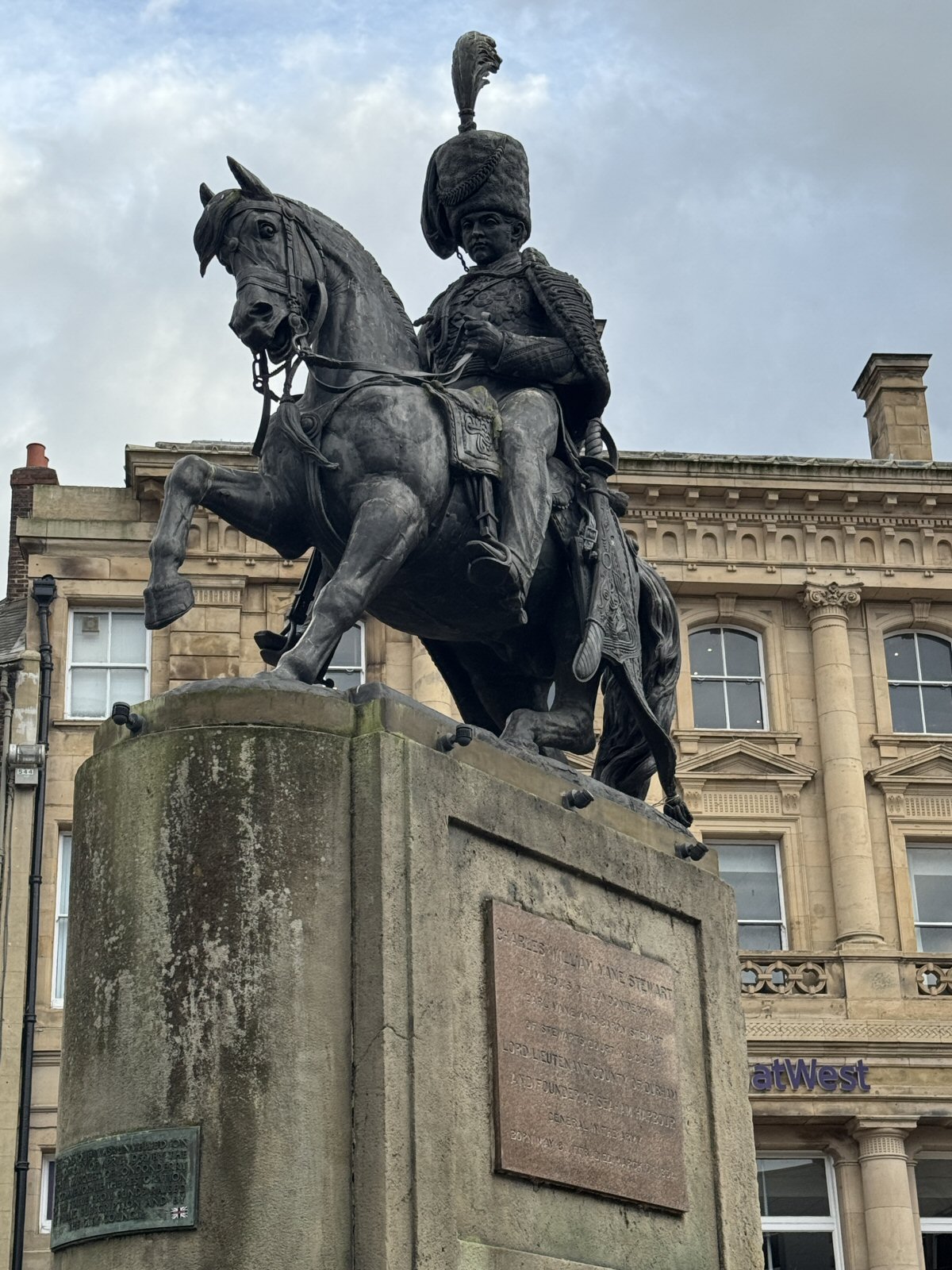
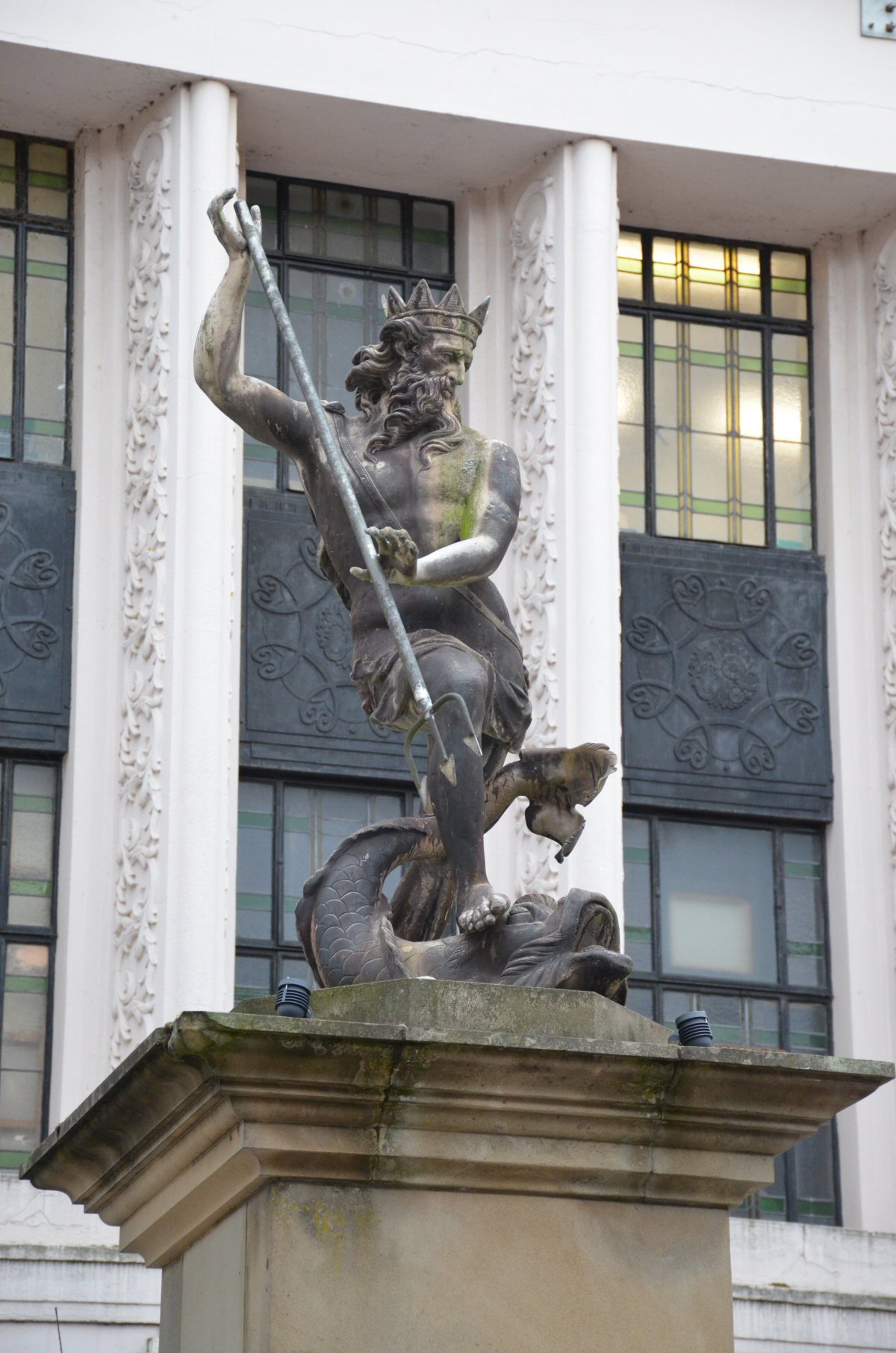
This is also the place to see the bronze monument of the 3rd Marquess of Londonderry upon his steed, a stone statue of Neptune, and the memorial erected in honour of the Durham Light Infantry. On Saturdays, an outdoor market of independent traders fills the space with hustle and bustle.
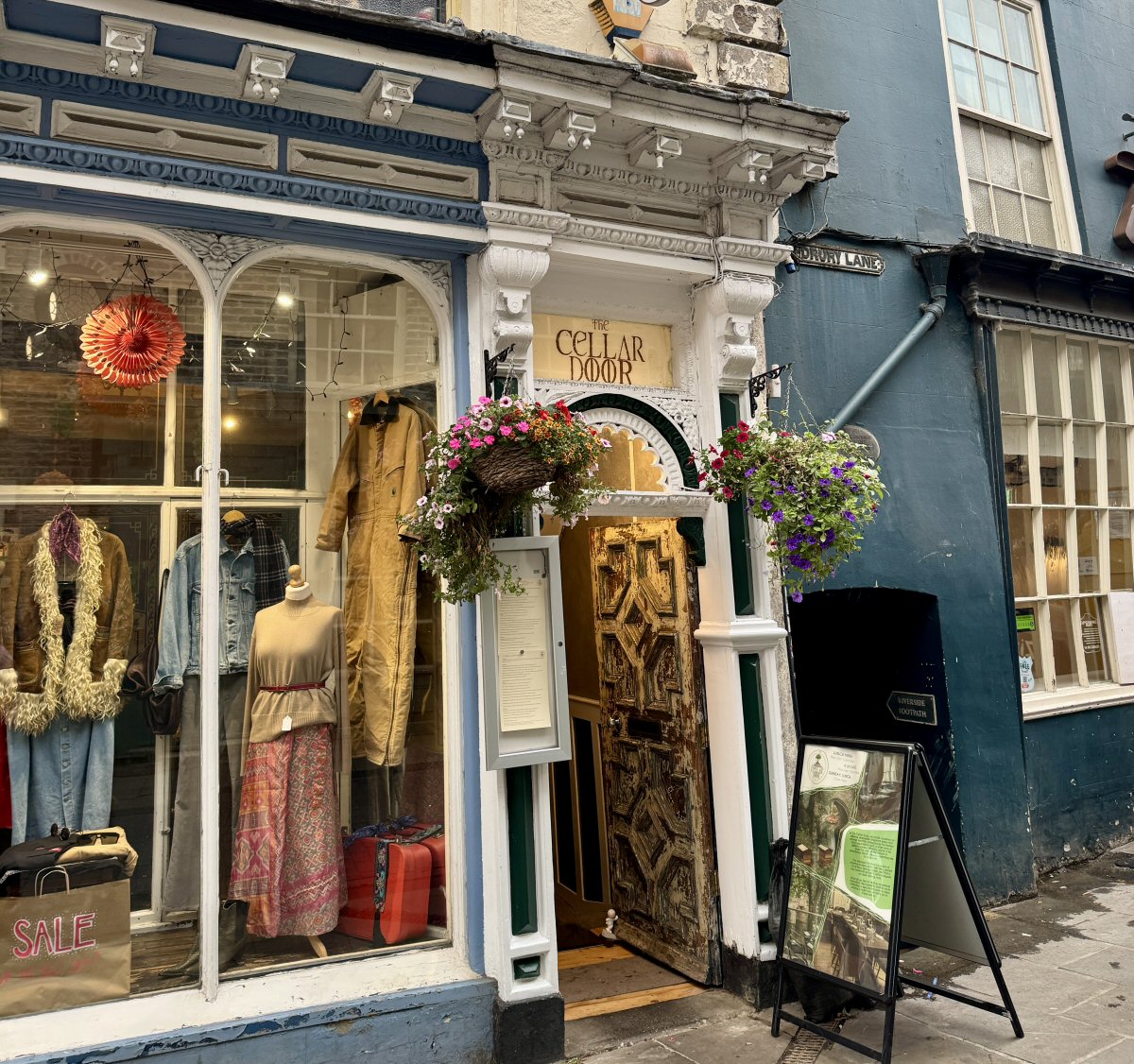
Foodies can literally get their fill with fine dining restaurants such as The Cellar Door (which we were very much looking forward to visiting) and a growing indoor street-food scene centred mainly around The Riverwalk.
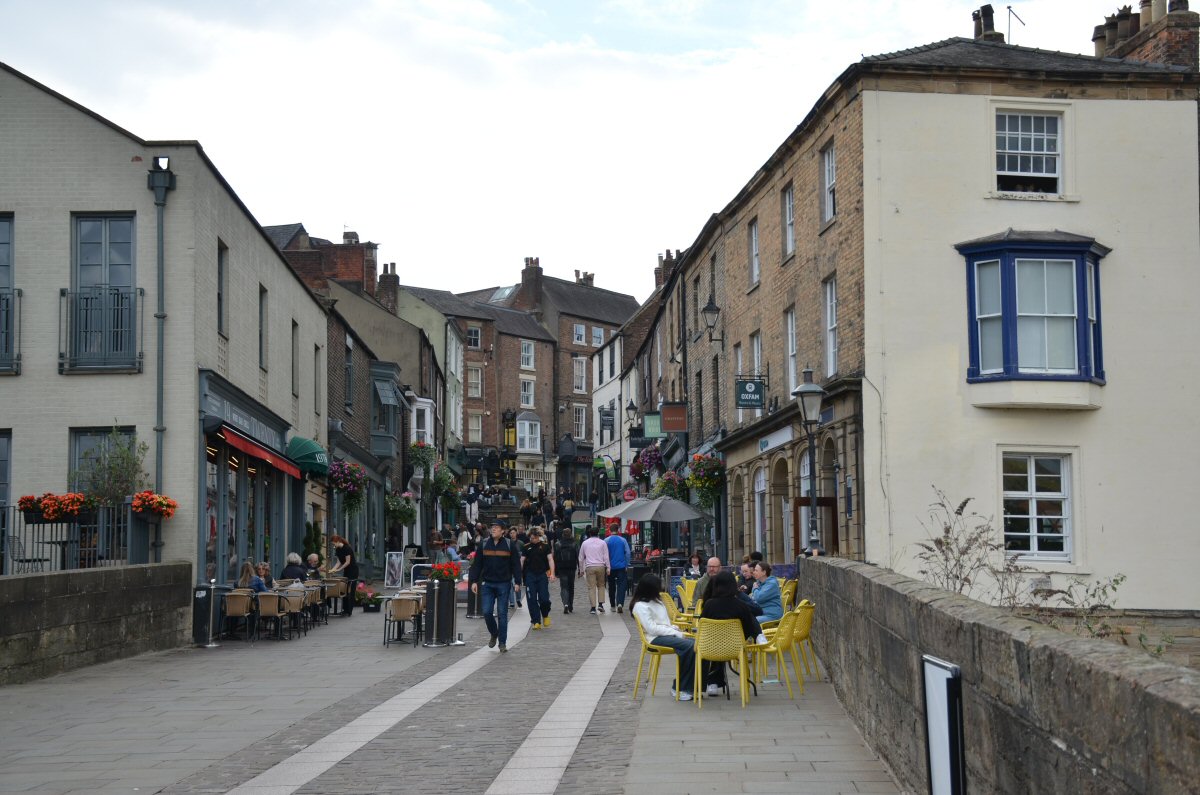
Obviously, Durham has a lively arts and culture offering, being a university city, and there are both historic and contemporary arts to view. Various exhibitions and live music spots are other attractions within this vibrant city.
We might only have been in Durham for the day, but both of us fell for its charms and said how easy it would be to have an extended weekend break filled with things to do. Hot Wings given here.
We were invited to visit Durham Cathedral as part of our press trip organised by Experience North East England, supported by NewcastleGateshead, Visit Northumberland and Visit County Durham.
You might also enjoy: